
Help Decrease the Phonological Process of “Fronting”
By Vanessa Sanchez, M.S., CCC-SLP
A phonological process refers to a speech pattern that children use as they are acquiring and developing their speech sound skills. These error patterns are typical up until a certain age, when they are eventually eliminated. They are eliminated as the child begins to master the production of speech sounds. If a phonological process persists after a certain age, then a child’s speech intelligibility can be negatively affected. A significant impact on speech sound skills may then result in a child having a phonological processing disorder. A child with this disorder may be difficult to understand and therefore, be unable to communicate effectively with others.
One common phonological process that occurs is called fronting. Fronting refers to when a child produces a front sound such as “t” and “d” in place of a back sound such as /k/ and /g/. For example, a child may say “tootie” instead of “cookie”, “tar” instead of “car”, or “doat” instead of “goat”. In regards to the position of the tongue, a child who is fronting will lift up the tongue tip, rather than suppressing it down and lifting the back of the tongue. The phonological process of fronting is typically eliminated by ages 3-4.
Here are some tips to help a child correctly produce back sounds /k/ and /g/:
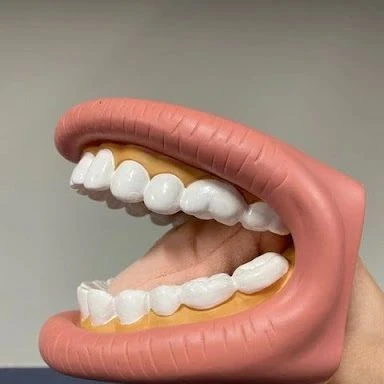
Awareness: It is important for a child to understand and be aware of how to produce target sounds /k/ and /g/. This may involve using a mirror and showing them where their tongue is located and how to move their tongue. Show the child the following 2 points in their mouth and have them identify them on themselves:
- Tongue Tip: Have the child move their tongue tip to touch different areas of their mouth (teeth, cheek, lip, etc.) in order to become familiar with where it is.
- Space Behind Bottom Front Teeth: This is a spot where we want the tongue tip to rest when we lift the back of our tongue for production of /k/ and/g/ sounds.
- Note: you can use a thin popsicle stick or other item to gently touch points in a child’s mouth in order to help them find those points with their tongue tip.
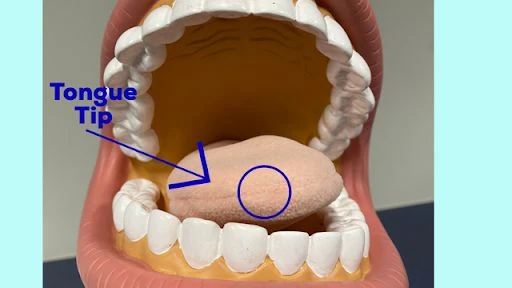
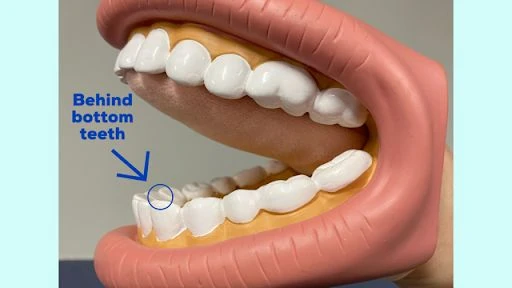
Tools: You can use items to help provide tactile cues for children to better understand where to position their tongue. In addition, you can use these items to assist with guiding the child’s tongue for producing the target /k/ and /g/ sounds correctly.
- Tongue Depressor: Use a tongue depressor to gently push down on the child’s front area of the tongue during production of /k/ and /g/ sounds. If a child is used to lifting up the tongue tip, you may feel some resistance. The tongue depressor is a great way to reinforce the appropriate tongue placement, as well as provide tactile assistance for the child.
- Lollipop: Some children may not like the sight, feel, or taste of a tongue depressor. A small lollipop, such as a Dum-Dum may work as motivator for a child to practice their target /k/ and /g/ sounds. Use the lollipop in the same way you would the tongue depressor.
- Mirror: Have fun with it! A child may enjoy looking at their tongue abilities in a mirror. Plus, it provides fantastic visual feedback for improved accuracy.
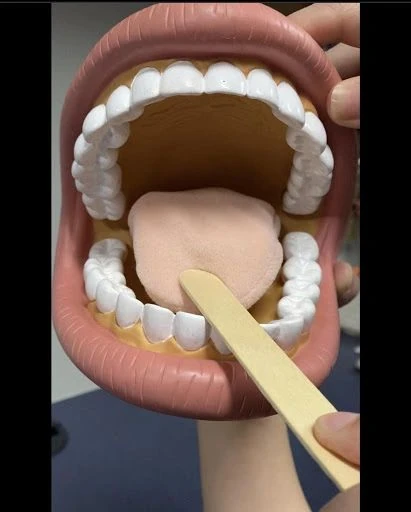
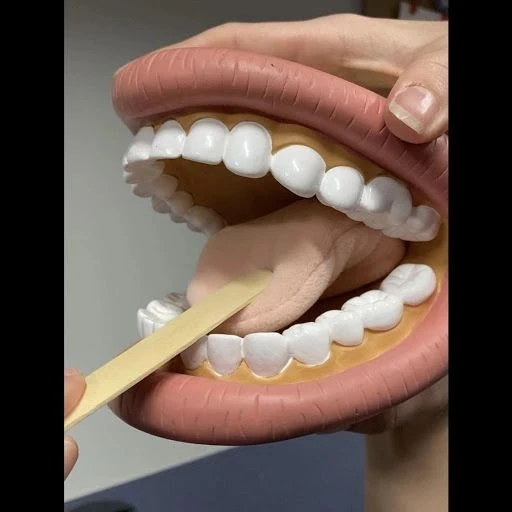
Carryover: Once the child has demonstrated consistent success using the selected tool, you can slowly fade out the tongue depressor and/or lollipop as they begin to produce the sound more independently, and with less assistance. You can then focus on words that contain /k/ and /g/ sounds during a variety of activities, in order to provide many opportunities for the child to continue practicing the learned sounds.
- Word Lists: You can find a variety of online resources with word lists containing target sounds /k/ and /g/; use these for drill practice.
- Books: Read books that contain target sounds! Here is a great website that helps you find books based on target speech sound: www.booksharetime.com
- Nursery Rhymes/Songs: If the child loves music, incorporate the target speech sounds in sing-along songs!
- Arts & Crafts: Pinterest website is a great resource to find age-appropriate craft activities to target sounds /k/ and /g/.
Remember to make it FUN!
Please reach out to one of our speech therapists with any questions!