
Let's Climb!
By Elizabeth Dinn Marsh, OTR, MS, MOT
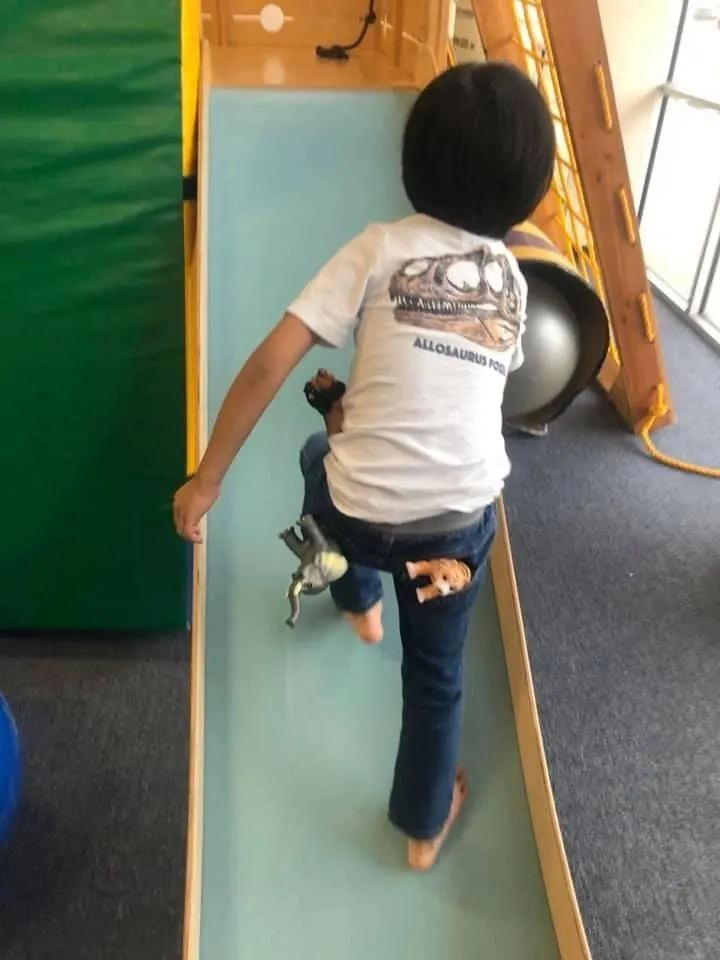
Climbing, whether on a playground, indoor rock wall, or even climbing trees, offers numerous benefits for a child's development. Here are some reasons why climbing is important:
- Physical Development:
- Strengthens Muscles: Climbing involves pulling oneself up and maintaining the arms, legs, back, and shoulders.
- Enhances Coordination: Navigating climbing routes requires children to coordinate their hands and feet, improving their motor coordination.
- Improves Balance: Maintaining balance while climbing helps develop a child’s core strength and stability.
- Boosts Fitness: Climbing is a physically demanding activity that can improve cardiovascular health and overall fitness.
- Improves Proprioception (body awareness): When kids climb, they may be unable to make direct eye contact with where their arms or legs are going. They need to make some “calculations” in their heads to estimate distances and understand how their movements relate to the position of the climbing structure.
2. Cognitive Development:
- Problem Solving: Climbing requires children to think ahead and plan their moves, which enhances their problem-solving skills.
- Spatial Awareness: Children develop a better understanding of spatial relationships as they decide where to place their hands and feet.
- Concentration: Climbing requires focus on where to move next, helping improve concentration levels. Advanced rock climbers even show enhanced attention capacities.
- Patience: As children climb, they exercise their ability to hone in on the task in front of them and be patient while they think it through.
3. Psychological Development:
- Builds Confidence and Self-Esteem: Mastering climbing routes can provide a profound sense of achievement, boosting confidence and self-esteem.
- Reduces Fear: Regularly facing and overcoming climbing challenges can help children manage fear and anxiety.
- Promotes Perseverance: Climbing can be challenging, and children learn to persevere through difficult routes, enhancing their resilience.
4. Social Skills:
- Encourages Teamwork: Climbing is a social activity that fosters trust and cooperation when children climb with others, especially in belaying activities.
- Improves Communication Skills: Climbing often requires verbal communication, such as asking for help or discussing routes.
5. Emotional Development:
- Stress Relief: Physical activities, including climbing, are great ways for children to relieve stress and express emotions physically.
- Sense of Adventure: Climbing can instill a sense of adventure, encouraging children to explore new activities and environments.
Overall, climbing is a thrilling and joyous activity that supports a child’s holistic development. It provides a fun and engaging way for children to grow physically, mentally, and emotionally, making it a valuable addition to any child’s activities.
Local places that offer opportunities to climb:
Pediatric Therapy Specialists
Hardberger Park - Nature Play Area
Various Trampoline and Adventure Parks